Sunday, September 24, 2006

Quality of Life

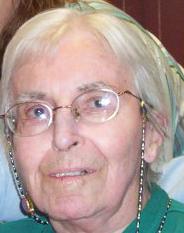
My sister Betty took this photo of Mom on a recent visit to see her. She isn't as talkative as she used to be, but she definitely looks like she was enjoying the visit, and the staff had dressed her so nicely.


This past week (after I reminded staff that she was very late for both her opthamology and neurology checkups ... then appointments were made), we found out she not only needs a new eyeglass prescripton, but that she doesn't have her old pair anymore because they were broken recently. We learned this through a voicemail, but no reason was given. They also want to know if we want them to followup on the recommendation of getting a new pair; it was intimated that she doesn't use them so why bother. I definitely feel she should have them. To see much at all, she needs them, especially since her glacouma has obviously worsened. Even if she doesn't read as much as she once did, she often looks through her photo collection, and that is comforting to her. It's the least we can do...

Sunday, September 10, 2006

"Growing Old" DVD


How does someone define aging? Is your age in your body or in your mind?

A wonderful new documentary film explores this...

Monday, September 04, 2006

Dementia Diary

"Her world was shrinking, and she was becoming more and more isolated. Those she offended saw only a difficult personality getting worse. No one suspected the demon growing inside of her, the illness that had begun to twist her memories, her judgment, and her emotions..."
Bob Tell writes about his mother as she slips into Dementia, a tale many of us know all too well.

Thursday, August 17, 2006

Weary

This past weekend, my sister Sharon from Chicago came to town for a short visit. On Saturday, all three of us daughters met at Eventide to visit Mom.

I arrived first, then Sharon, and finally Betty. While Sharon and I were awaiting Betty, Sharon left the family visiting room to check on something. While she was gone, I started talking with Mom, even though she was dozing and hadn't said anything despite our trying to engage her. I went around back of her wheelchair, and put my arms around her and bent down to talk softly near her ear. I told her how much I missed talking with her and Dad, and how much I loved her, and then just smelled her, and felt her skin next to mine, and was quiet with her. Before I knew it, Sharon was entering the room, and I realized my eyes were moist...I was very glad to have had those few moments alone with her.

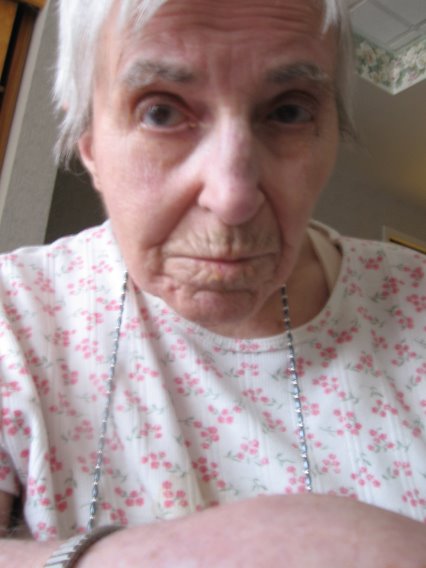
Later during the visit, I got down in the front and said to Mom, since you are so tired, I'll get down here to take your picture, half-joking with her. She momentarily lifted her head and looked at me as I shot this photo of her...

Later, as I said goodbye, Mom spoke for the first time, asking did I have to leave, and I explained I would see her soon, and that I loved her, and she responded I love you, too, Trisha...That really made me smile! She did know me after all...

Wednesday, August 16, 2006

Lifelong Love

It is a fearful thing to love what death can touch
[ Epithet on a New England tombstone ]


This weekend I was listening to this program. A segment featured the lifelong love of Page and Eloise Smith, a couple that died one day apart after spending a lifetime together. Of course, it immediately made me think of my own parents.

I wrote to their son Eliot, the man behind the memorial website, and he responded...
Good Morning Trish,

Thank you so much for reaching out. We are the lucky ones with family legends to live by and deep gifts that enrich us. It has been over 10 years now and I still think of them every day, see things I wish I could show them, learn things I wish I could share. Now in my 50's, there is nothing I would love more than to climb into bed next to them and watch TV while my mother dozes with her bifocals turned upside down, and my father reads a book.
A short while later, I heard from Anne, Page & Eliose's daughter...
Dear Trish,

My brother Eliot emailed me this morning to say that you had written to him after the "this American Life" segment on last words and the story of our parents deaths. The voice in the piece was mine (along with John Dizikes, a close friend of mom and dad).

I looked at the links you included with your email. I was struck by the similarities in my in-laws lives. My mother-in-law died 5 years before her husband did. My father-in-law lived a hard and lonely five years without her and died this last December after being bed-ridden in a nursing home for over eight months. It was a terrible decline and he was very confused, barely able to participate in a conversation the whole time. It was very hard for us watching Bob's decline and spending so much time in the nursing home for such an extended period. What a journey our parents (and we) all must travel. I feel deeply for you and your mother.

Anne

Tuesday, August 15, 2006

Young Love Remembered


Herman and Nora were young and in love. They met as students, and had a passion for writing.

Herman's life was cut short. Nora's life has been long.

Listen to her remember...

Monday, August 14, 2006

Telling It All

Geriatric1927 is not just using simple tools, he is re-engineering his social world with them.

His name is Peter. He's from England, he's 79, and he's found what for him is an exciting new way to meet new friends and be engaged with the world. Read more about Peter here.

You can see one of his videos here...

Sunday, August 06, 2006

Twilight Descending


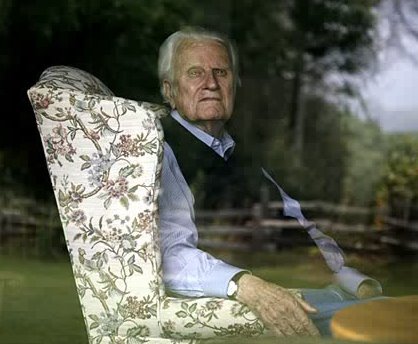
At night, as they read and reminisce and sometimes just gaze at one another, the Grahams' conversation often turns to what they believe awaits them beyond the grave. "I think about heaven a great deal, I think about the failures in my life in the past, but know that they have been covered by the blood of Christ, and that gives me a great sense of confidence," says Graham. "I have a certainty about eternity that is a wonderful thing, and I thank God for giving me that certainty. I do not fear death. I may fear a little bit about the process, but not death itself, because I think the moment that my spirit leaves this body, I will be in the presence of the Lord."
In the twilight, Billy Graham shares what he's learned in reflecting on politics and Scripture, old age and death, mysteries and moderation.

Wednesday, August 02, 2006

"..waiting for the inevitable..."

Age is a terrible thief. Just when you're getting the hang of life, it knocks your legs out from under you and stoops your back. It makes you ache and muddies your head and silently spreads cancer throughout your spouse.

Metastatic, the doctor said. A matter of weeks or months. But my darling was as frail as a bird. She died nine days later. After sixty-one years together, she simply clutched my hand and exhaled.

Although there are times I'd give anything to have her back, I'm glad she went first. Losing her was like being cleft down the middle. It was the moment it all ended for me, and I wouldn't have wanted her to go through that. Being the survivor stinks.

I used to think I preferred getting old to the alternative, but now I'm not sure. Sometimes the monotony of bingo and sing-alongs and ancient dusty people parked in the hallway in wheelchairs makes me long for death. Particularly when I remember that I'm one of the ancient dusty people, filed away like some worthless tchotchke.

But there's nothing to be done about it. All I can do is put in time waiting for the inevitable, observing as the ghosts of my past rattle around my vacuous present. They crash and bang and make themselves at home, mostly because there's no competition. I've stopped fighting them.

They're crashing and banging around in there now.

Make yourselves at home, boys. Stay awhile. Oh, sorry — I see you already have.

Damn ghosts.
From Sara Gruen's Water for Elephants

Sunday, July 30, 2006

Advocating for our Elderly Parents


The Right Way to Complain

When your loved one is suffering, your first reaction is likely to be outrage. While you may want to scream at a careless aide, pause to consider what's ultimately best for your family member. Controlling your temper may be hard but keeping a civil demeanor will help get your complaints resolved more quickly. Here is the protocol to follow:

1. Talk to the staff responsible for your loved one's care. Don't accuse or attack them, but let them know what the problem is clearly, calmly and respectfully. Intemperate words not only will antagonize the staff but can also be used to "prove" you're a danger. If a worker cites reasons for the lapse, listen to her, make sure you understand and ask how you can work together to prevent the situation from recurring. At home, keep a log of such conversations. If the situation is resolved successfully, thank the staff members involved.

2. If the problem isn't corrected in a timely way, complain in writing to your nursing home administrator. Again, be civil. Describe the issue and your efforts to resolve it clearly, without berating or threatening the staff. Keep copies of your complaints, all responses and any evidence.

3. If you don't get a satisfactory response, request outside mediation from your state ombudsman's office. After an ombudsman is appointed, he or she will talk to you and nursing home personnel to try to resolve your differences amicably.

4. If the problem's still not settled, contact your state Department of Health. Provide a detailed, documented summary of your complaint. The state will then dispatch inspectors to investigate your claims. If you disagree with the findings, you may need to hire an outside attorney and file a lawsuit.

5. Establish an independent family council with other residents' relatives so that you can voice your concerns collectively. The National Citizens' Coalition for Nursing Home Reform (NCCNHR) offers advice on how to get started.

6. After you complain, be extra-vigilant and document reprisals. If you suspect retaliation, consult an independent advocate. NCCNHR's Web site offers a list.

From The Truth About Nursing Homes